OpenAI Business Hub vs Google Search Console
Is OpenAI Business Hub the Search Console for ChatGPT? A side-by-side look at data, verification, controls and limits, plus how to use both together.
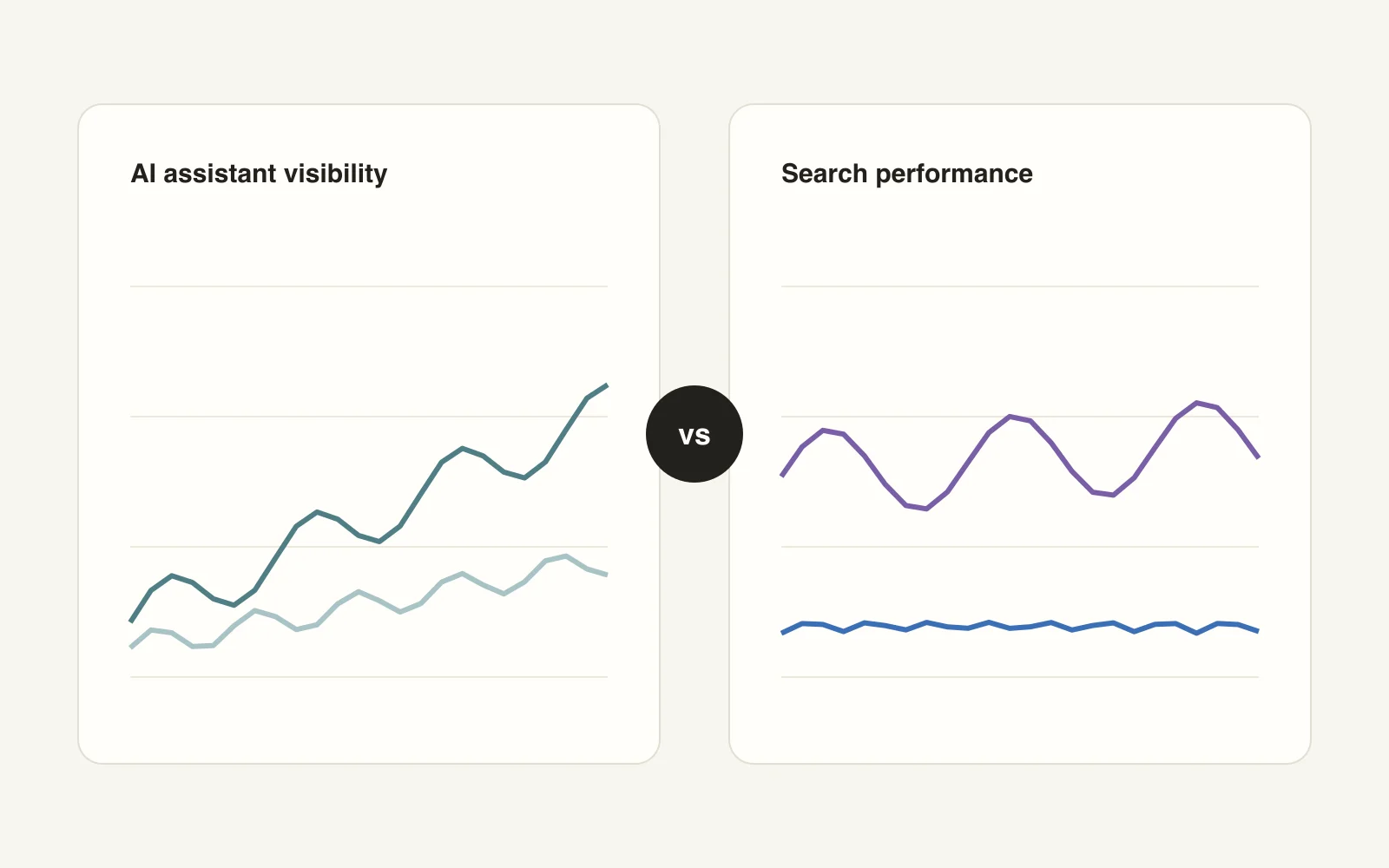
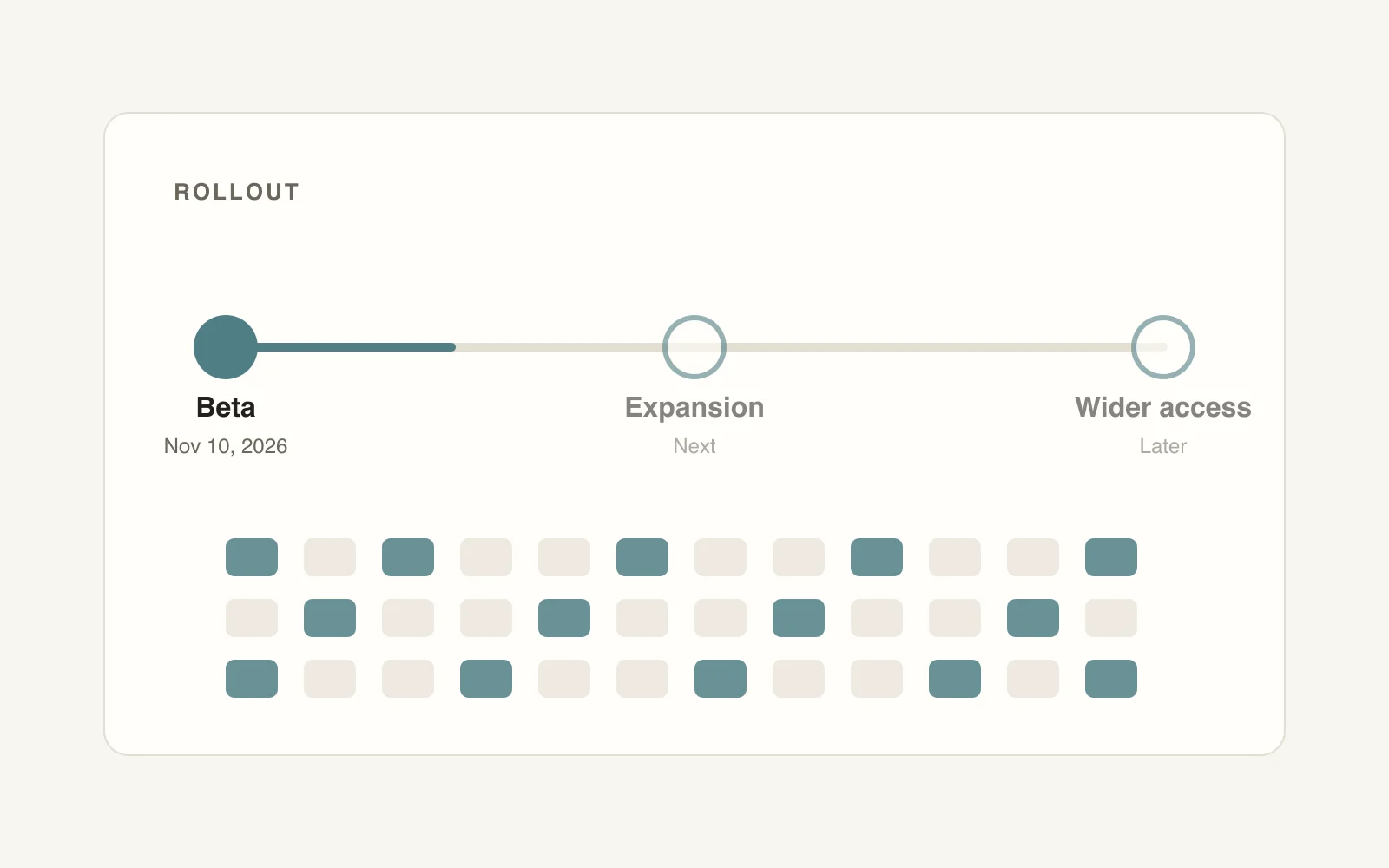
When OpenAI opened Business Hub on November 10, 2026, many marketers called it the Search Console for ChatGPT. The comparison is half right. Both are free, both require you to prove ownership and both report how often a platform showed your business. Past that, they answer different questions with very different levels of detail.
Business Hub actually sits closer to a blend of Google Search Console and Google Business Profile, with a thinner data layer than either. This guide compares them feature by feature so you know what each can and can’t tell you.
The short answer
Google Search Console tells you how Google crawls, indexes and ranks your pages, down to the individual query. OpenAI Business Hub tells you roughly how often ChatGPT mentions your business and lets you edit the facts it uses. You need Search Console to diagnose your website. You need Business Hub to manage your presence inside ChatGPT. Neither replaces the other.
Side by side
| Google Search Console | OpenAI Business Hub | |
|---|---|---|
| Launched | 2006 (as Webmaster Tools) | November 2026, beta |
| Cost | Free | Free at launch |
| Unit of tracking | Website and URLs | Business entity |
| Verification | DNS record, HTML file, meta tag, Analytics or Tag Manager | Phone, email, DNS record or Shopify, then Persona ID check |
| Visibility metric | Impressions | Mentions |
| Traffic metric | Clicks | Website clicks |
| Query data | Yes, individual queries | No, five topic themes |
| Position data | Average position | None |
| Page-level data | Yes | No |
| History | 16 months | Short windows (7 or 28 days reported) |
| Technical reports | Indexing, Core Web Vitals, sitemaps, URL inspection | None |
| Edit how you appear | Indirectly, through your site and structured data | Directly, through profile fields and product feeds |
| Competitor data | No | No |
| API and export | Yes | Not at launch |
Where they overlap
Ownership checks. Both make you prove you control the business before showing data. Search Console verifies a website. Business Hub verifies a business, using a DNS TXT record as one option, and then adds a personal identity check through Persona that Google doesn’t require.
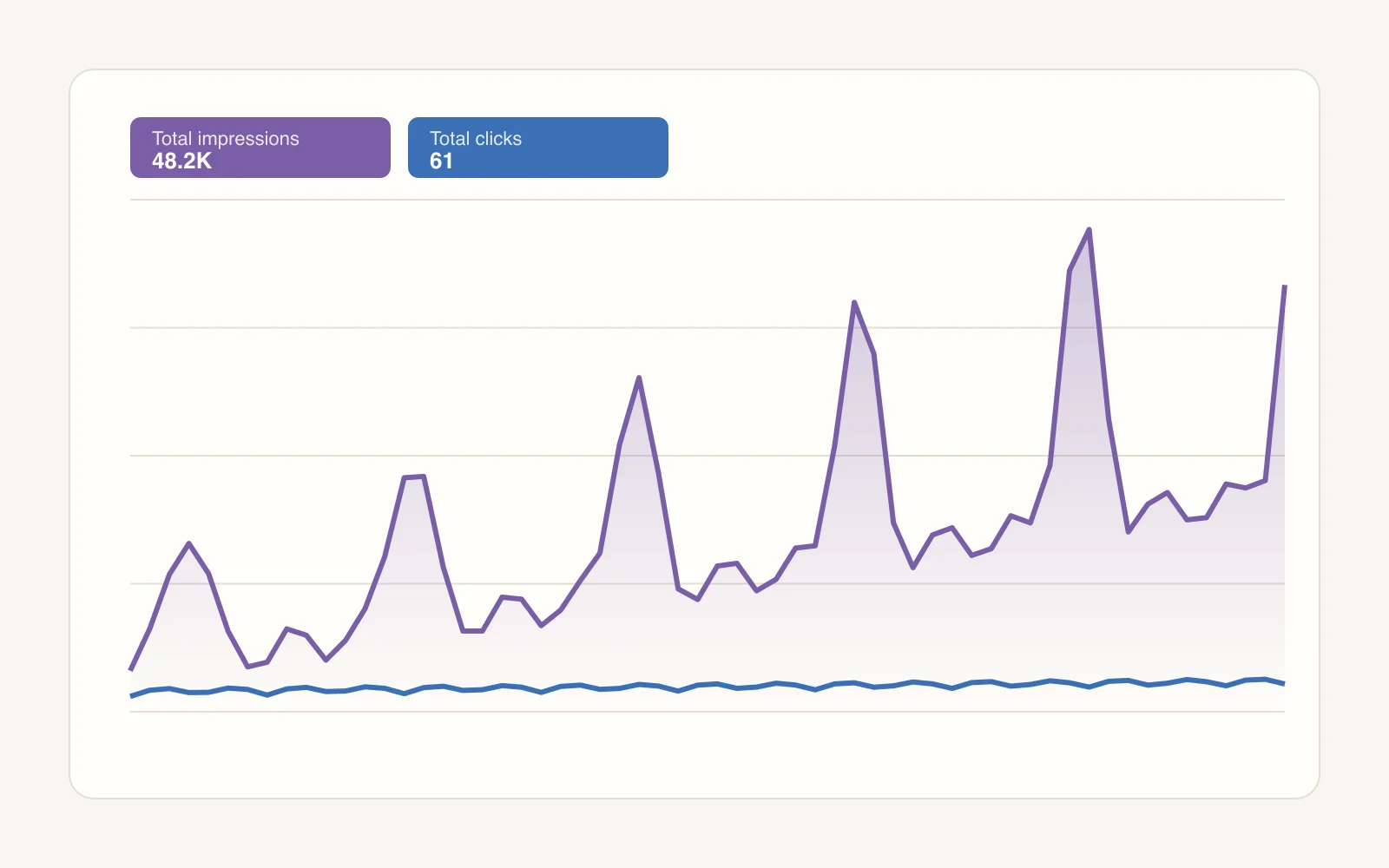
A visibility count and a click count. Search Console’s impressions and clicks map loosely to Business Hub’s mentions and website clicks. Both platforms are honest that the first number overstates attention. An impression means your link loaded on a results page. A mention means ChatGPT referenced you in a response, whether or not anyone acted on it.
Privacy thresholds. Search Console hides some rare queries to protect users. Business Hub goes further and hides whole metrics when volume is low. In both tools, a blank is a missing value. It isn’t a zero.
No paid influence. Google says Search Console has no effect on ranking. OpenAI says claiming a profile doesn’t guarantee more visibility or control over recommendations. Both tools report on the system. Neither lets you steer it.
Where they differ
Query data
This is the biggest gap. Search Console shows the actual words people searched, with clicks, impressions, CTR and position for each. That’s what lets you find a page stuck at position 11 or a query you never meant to rank for.
Business Hub shows no prompts. You get your top five discovery topics, each with a share of mentions, plus an “Other” bucket. That tells you the territory you’re associated with. It won’t tell you which question produced a mention or how ChatGPT phrased its answer.
Pages versus entities
Search Console thinks in URLs. Every metric can be split by page, country, device and search appearance. Business Hub thinks in businesses. Your company is the unit, and a mention for an online business generally means ChatGPT pointed to your website. There’s no breakdown by URL or device.
Position
Search Console reports average position. ChatGPT answers don’t have ranked positions in the same sense. A business might be the first suggestion, one of five in a list or a footnote citation, and Business Hub doesn’t distinguish between them.
Technical diagnostics
Search Console’s most useful reports often have nothing to do with traffic: pages that failed to index, crawl errors, mobile usability, Core Web Vitals, manual actions and security issues. Business Hub has no equivalent. If ChatGPT can’t access or understand your site, Business Hub won’t tell you why.
Direct editing
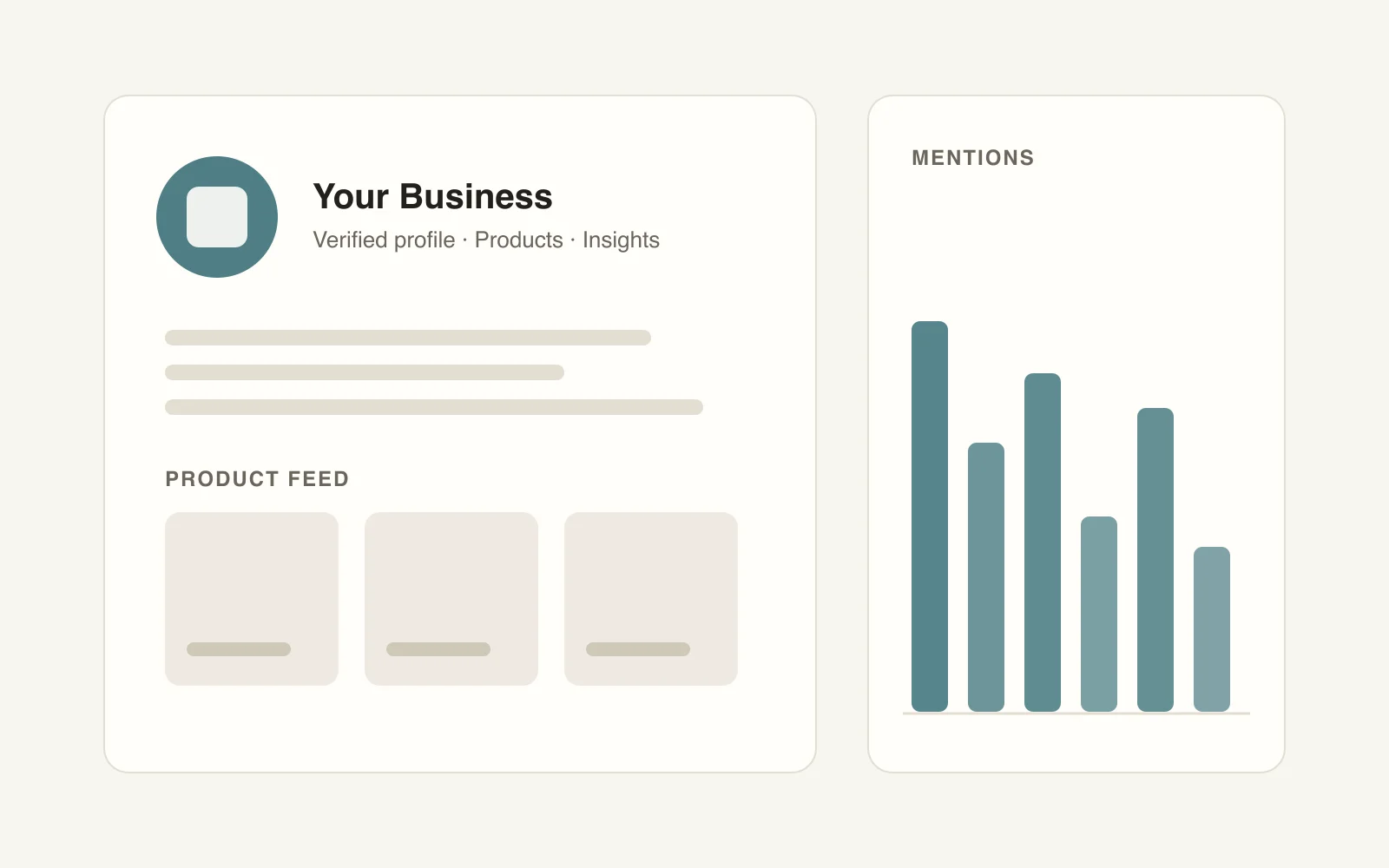
Here Business Hub does something Search Console can’t. You can set your category, description, contact details, delivery and return terms and upload a product feed with live prices. In Google’s world, that job belongs to Google Business Profile and Merchant Center. Business Hub folds a version of all three into one dashboard.
Conversations with customers
Eligible US online businesses can publish a business agent that answers shopper questions inside ChatGPT. Google has no counterpart in Search Console. The closest comparison is the chat and Q&A features that have come and gone in Google Business Profile.
History and export
Search Console keeps 16 months of data and offers an API and BigQuery export. Business Hub shows short rolling windows, and OpenAI hasn’t said how long it keeps mention history. Until that changes, keep your own records.
How to use both together
The two tools work best as a pair. A simple monthly routine:
- Pull Search Console first. Export the last 28 days of queries and pages, then note which priority queries now trigger an AI Overview. Our guide to reading Search Console when impressions rise and clicks fall covers this in depth.
- Open Business Hub Insights. Record mentions, website clicks and the five discovery topics.
- Compare the topics. If ChatGPT associates you with themes that don’t appear among your top Search Console queries, you’ve found either a content gap or a mismatch in how you describe yourself.
- Check referral traffic in analytics. Business Hub’s click number doesn’t confirm visits. Look for sessions from chatgpt.com in your own analytics and compare the trend.
- Fix facts in Business Hub, fix pages on your site. Wrong details about returns or delivery go in the profile. Thin or outdated content goes on your site, where both Google and ChatGPT read it.
What Business Hub would need to match Search Console
If OpenAI wants Business Hub to become a true peer to Search Console, three additions would matter most: prompt-level or at least query-cluster data, longer history with export and some view of which pages ChatGPT cites. None of these were part of the beta at launch. For now, treat Business Hub as a profile manager with a basic visibility counter, and keep Search Console as your main window into how search engines see your site.
Read the rest of this series: What Is OpenAI Business Hub? and OpenAI Business Hub Rollout: Who Can Use It Now. Browse more SEO guides.