
AI-Native Customer Experience: What Businesses Need to Know
AI-native CX rebuilds the customer journey around intelligence, not a chatbot bolted onto old systems. Here's what changes and how to adopt it responsibly.
AI Marketing
AI and automation in marketing: generative tools, agents and the data strategy that makes them pay off.
AI-native CX rebuilds the customer journey around intelligence, not a chatbot bolted onto old systems. Here's what changes and how to adopt it responsibly.

Ranking first on Google means nothing if ChatGPT or Perplexity never mentions you. Here are the tested moves that influence whether an AI answer cites you.

Handing an AI agent a goal and letting it plan and act on its own is now possible, and risky without a plan. Here's how to build an autonomous agent strategy.

AI Overviews expanded, Google launched a conversational AI Mode, chatbots started browsing the live web and publishers began cutting licensing deals this year.
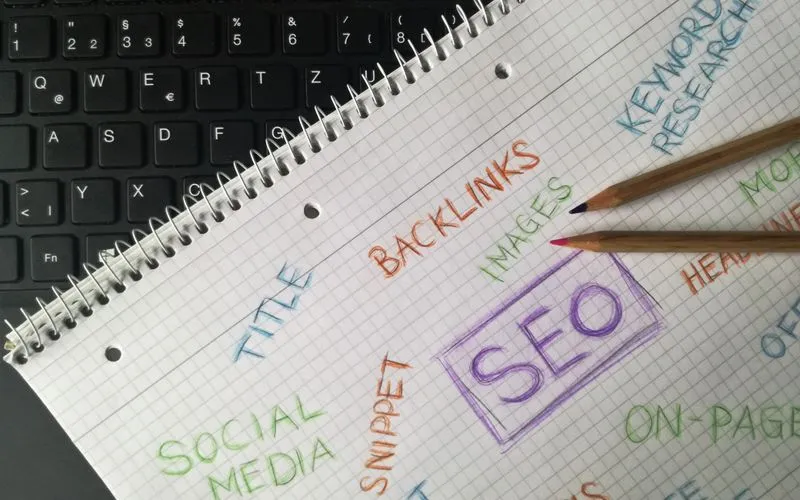
AEO did not appear out of nowhere in the ChatGPT era. It grew from a decade of featured snippets, voice search and zero-click search, and recently got a name.

An AI agent doesn't just draft a post when asked, it can plan, use software and act with autonomy toward a goal. Here's what that means in practice.

Knowing AI answers matter isn't a process for winning citations. Here's the weekly workflow, roles, tools and cadence to run GEO as an ongoing operation.
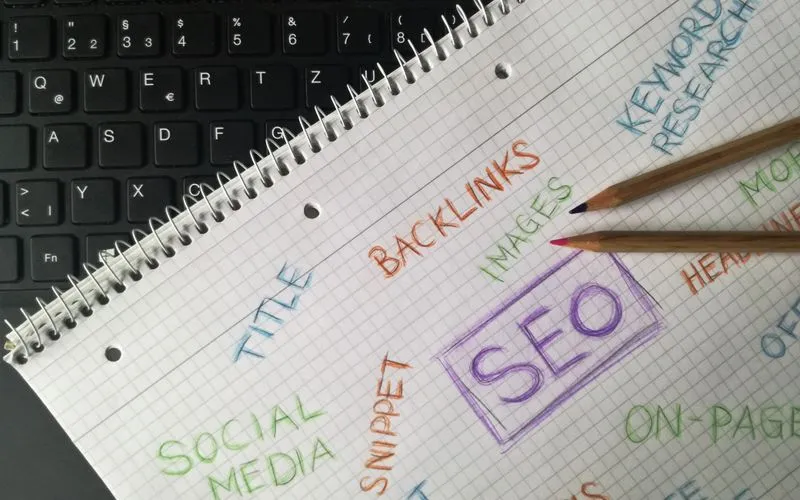
People increasingly want an answer, not ten blue links, and voice assistants and AI chat deliver one directly. Here's what Answer Engine Optimization means.
A year-in-review look at how AI agents moved from chatbot novelty to real marketing workflows in 2025, and what teams learned from putting them to work.
AI can let a small SEO team punch above its weight, or be the fastest way to tank a site with thin pages. Here's the line between the two, and why it matters.
The origin story of Google's Search Generative Experience, from its opt-in debut at I/O 2023 through its rocky, default rollout as AI Overviews in 2024.

A 2024 snapshot of generative AI strategy: new releases from Google, Anthropic and OpenAI, the shift from novelty to workflow and Google's AI content crackdown.
A 2024 framework for using AI in SEO without triggering Google's crackdown on scaled, low-value AI content, built around the March 2024 core update.
Google tested AI answers atop search results as Search Generative Experience, then rolled it out as AI Overviews. Here's what changes for organic traffic.

Most companies adopted generative AI one person at a time, with no plan and no guardrails. Here's what that costs, and what a real strategy needs to cover.

Eight months after ChatGPT hit 100 million users, most marketing teams have tried it, fewer have a real workflow and almost none solved brand-voice issues.

ChatGPT is the tool most marketers open first, and the gap between real value and generic filler comes down to how they prompt it. Here's what to ask for.

ChatGPT put generative AI in front of every marketer overnight. Here's how it works, what it's good at, where it fails and how to avoid publishing wrong copy.

An illustrative example of how an online retailer could use 2018-era automated bidding and lookalike audiences to cut wasted ad spend with no data science team.

Google's Smart Bidding rollout, dynamic creative optimization and useful marketing chatbots: what machine learning changed this year, versus what's still hype.
Facebook Messenger and Slack made chatbots fashionable in 2017, but most were decision trees in an AI costume. Here is what they could do and how to deploy one.
A year after the Messenger bot rush, the operational playbook for 2017 is about narrowing scope and fixing the engagement drop-off nobody expected.
An illustrative look at how a small service business could use the Messenger bot platform Facebook opened in April 2016 to handle bookings without new hires.
Facebook's April 2016 Messenger bot launch, Microsoft's Tay controversy and a wave of competing bot platforms defined chatbots as this year's marketing story.
Google's Caffeine rollout and the MayDay update made speed, freshness and thin content quality matter in 2010, ahead of any formal quality-focused update.
2009 turned SEO from a Google-only conversation into a real competitive market, with Bing's launch, real-time search and a rebuilt index all in one year.
A step-by-step build order for a 2009 SEO strategy on a recession budget, from keyword research through link earning to tracking what converts.
As the recession squeezed ad budgets in 2008, SEO's measurable, low-cost return pulled it from a nice-to-have into a survival tactic for many businesses.
From Yahoo's hand-curated directory to Google's PageRank and the Florida update, the decade-long path that turned SEO into a real discipline by 2008.
How Google crawls, indexes and ranks a page in 2007, and the concrete on-page and off-page steps that move you up the results.
The year Google's Universal Search rollout folded images, video, news and local results into ordinary rankings, and what that did to SEO strategy.
A decision framework for owners weighing search engine optimization in 2006: what it costs, what it returns and how to tell if your business is ready.
How crawling, indexing and ranking work under the hood in 2006, now that Google, Yahoo and MSN have agreed on a shared sitemap standard.
With better analytics finally showing where revenue comes from, 2005 is the year the long tail of organic search stopped being invisible.
A decision framework for owners deciding whether search engine optimization is worth budgeting for in 2005, and how to size that investment honestly.
A snapshot of where search stood in 2004: Yahoo running its own engine again, the Florida update's aftermath still settling and Google headed for an IPO.
As Google's ad auction pushes cost-per-click higher heading into its IPO, organic rankings are turning into the cheaper, more durable half of a search budget.
The exact-match keyword and manipulative-link habits that Google's November update just made a lot more costly for sites that leaned on them.
An illustrative look at how a small mail-order retailer rebuilt its site structure and earned real backlinks instead of chasing exact-match tricks.
A leaner 2002 build guide for businesses that survived the dot-com crash and need search traffic to pay for itself, not just look impressive.
The mistakes costing sites real rankings in 2002, from doorway pages to link farms, now that Google is actively hunting for manipulation.
How search engine optimization went from a webmaster's side task to an actual job title, with its own forums, consultants and vocabulary.
A 2001 build guide written for a search landscape where Google's link-based ranking is now the thing every strategy has to be built around.
2000 was the year Google went from a favorite among insiders to the engine most sites had to plan around, and marketing budgets started to follow.
From hand-curated web directories to Google's link-based ranking: a look at how search engine optimization became its own discipline.
A 1999 build guide for getting a small business site found, back when submitting to a dozen directories mattered more than any single search engine.
The mistakes tripping up 1999 webmasters most often, from invisible keyword text to frames-only navigation that crawlers simply cannot read.