A Practical Guide to Local Search
For any business that depends on nearby customers, local search is where they look first. Here is how Google decides who appears in the local pack.
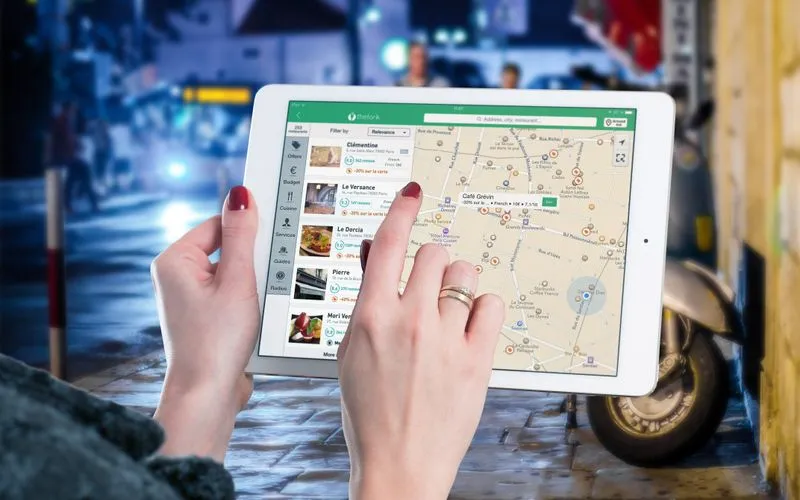
Search “coffee near me” and Google isn’t showing you the internet’s best writing about coffee. It’s showing you a short list of nearby cafes, ranked by an entirely different logic than the one that decides who wins a regular organic result. That separate logic is local search, and for any business that depends on people walking through a door or calling a phone number, it matters more than almost any other kind of search visibility.
Google’s local products have existed in some form since Google Local launched in 2004, evolving through Google Maps, Google Places and Google My Business before settling into today’s Google Business Profile. What hasn’t changed across two decades of renaming is the basic mechanism: a specific set of ranking factors, distinct from ordinary SEO, decides which handful of businesses get shown.
The prize is the local pack
Above the regular organic results, local searches trigger a map and a short list of businesses, usually three. That block, commonly called the local pack, absorbs the large majority of clicks and calls for a local search. Ranking below it in ordinary organic results still matters, but it’s a distant second prize.
Google chooses who fills the local pack using three factors:
Relevance. How closely the business matches what the searcher is looking for, judged through the business category, the services listed and how well the profile describes what’s offered.
Distance. How close the business is to the searcher or to the location they specified. This is the one factor no amount of optimization changes.
Prominence. How well-known and well-regarded the business appears to be, judged largely through reviews, links and mentions across the web, known as citations.
A business can’t move itself closer to every searcher, but relevance and prominence are both earnable, and most local competitors put in far less effort on them than they assume.
Why reviews carry so much weight
Reviews do two jobs at once in local search. They’re one of the clearest signals of prominence Google has to work with, and they’re the first thing a searcher reads before deciding which of three nearby options to call. A business with a steady flow of recent, positive reviews signals to both the algorithm and the human that it’s active and trusted. A stale profile with a handful of reviews from three years ago signals the opposite, even if the business is still doing fine.
The practical implication is that asking for reviews needs to be a habit built into how a business operates, not something remembered occasionally after a great interaction. Responding to reviews, including negative ones, adds a second signal of an engaged, present business.
The unglamorous fix: consistent information
A business’s name, address and phone number need to match exactly everywhere they appear online, the website, the Google profile, directories and social pages. An old address surviving on one directory while the current one shows everywhere else creates genuine confusion for search engines trying to determine which version is correct, and that confusion tends to suppress rankings rather than average them out. Auditing this across every place a business is listed is tedious and almost always overdue.
Local search is becoming answer search
A large share of voice queries and a growing share of AI-assisted searches are locally intended, things like “open now,” “near me” or “how do I get to.” The same inputs that win the local pack, an accurate profile, real reviews and consistent information, are exactly what those systems draw on to answer directly. Getting the fundamentals right now is preparation for a search landscape that increasingly skips the list of ten links entirely.
Local search rewards patience more than budget. The businesses that win it aren’t necessarily spending the most; they’re the ones that kept their profile accurate, kept asking for reviews and got their information straight everywhere it appears, month after month, while competitors let theirs go stale.