Mastering Short-Form Video: A Marketer's Playbook
An operational playbook for short-form video in 2025: hook mechanics, the signals that drive distribution and how to keep producing through TikTok uncertainty.

By 2025, short-form video wasn’t a channel marketers were still deciding whether to invest in. It was infrastructure, expected the way a website or an email list was expected a decade earlier. What changed the difficulty wasn’t the format itself; it was the platform landscape underneath it, particularly TikTok, whose legal status in the United States turned uncertain after the law requiring its sale or ban took effect in January 2025, followed by a series of enforcement delays through the year. A playbook built to depend on one app was no longer a safe bet, if it ever was.
Why short-form still behaves differently from everything else
Three properties make it unlike traditional advertising or even earlier social formats. Distribution runs on interest, not on who follows you, so a brand-new account can reach a huge audience on its first post while an established one can post to silence if a video doesn’t hold attention. The opening moment decides almost everything, since the feed is infinite and the next video is one flick away. And content that looks native to the platform, shot simply, direct to camera, consistently beats content that looks like an ad, because viewers are actively screening for exactly that signal.
The hook is the entire job
If retention drives distribution, the first second is where a video is won or lost. A handful of patterns work reliably: opening a loop that needs resolving, such as “the mistake almost everyone makes with X,” leading with a bold or counterintuitive claim, showing the result before explaining how it was achieved or naming the exact audience the video is for so the right viewer immediately knows to keep watching. The most common failure is still the simplest one: a slow open, a logo, a “hey everyone,” before getting to the actual point. By the time the point arrives, the viewer who would have cared is gone.
What the recommendation systems are measuring
None of the major platforms’ recommendation systems are mysterious once you know what they weigh. Completion and rewatch rate is the dominant signal, since it directly measures whether people wanted to keep watching. Watch time relative to length matters more than raw view count. Shares and saves, especially sending a video directly to another person, carry more weight than likes, because they’re a much stronger signal that the content had real value. Comments add engagement and extend how long a video holds attention in the feed. Design for these signals directly rather than guessing at trends, since they’re publicly discussed by every major platform’s own creator guidance.
The content that works for brands
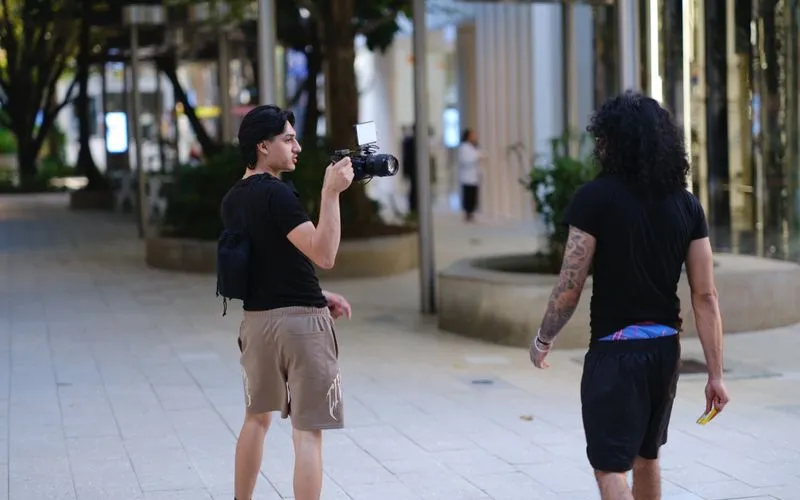
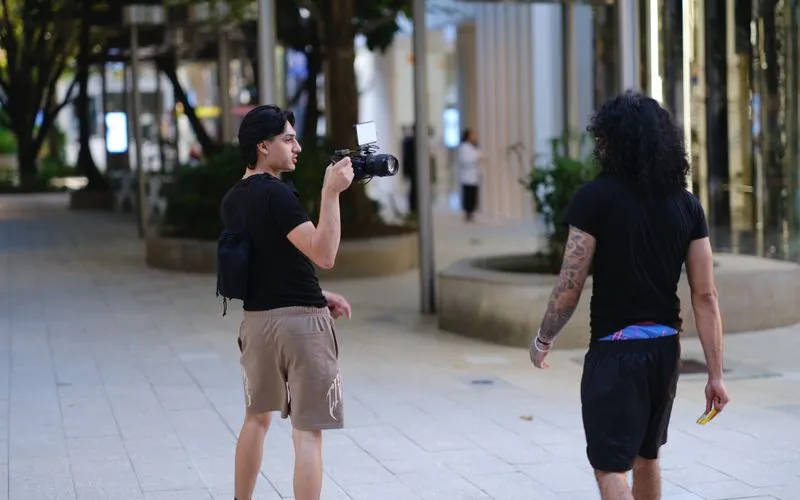
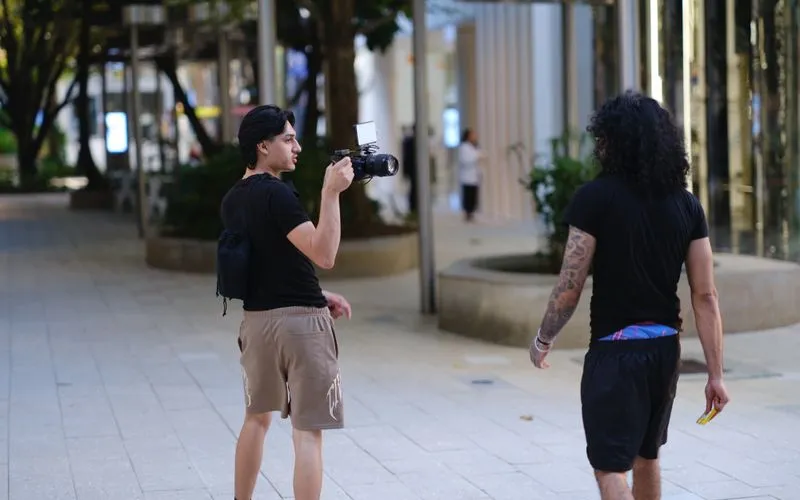
A handful of formats hold up reliably across platforms and industries. Quick, specific how-to content positions a brand as useful and gets saved for later. Behind-the-scenes footage of how something is made humanizes a brand in a way a finished ad never can. A defensible opinion on something in your field, stated plainly, tends to drive comments even from people who disagree. Trend participation works only when the trend fits; forced trend-jacking reads as exactly what it is. And customer results, told in the customer’s own words, function as social proof in a format viewers trust. Product commercials, notably, are the weakest performer of the group. The brands that earn the right to sell are usually the ones being useful or entertaining the other four times out of five.
Solving the production problem, not the creativity problem
A single viral clip is luck. A channel that keeps working is a system. Batch filming a month of content in one or two sessions removes the daily pressure that kills consistency. A repeatable recurring format trains an audience to expect you and removes the blank-page problem every single time. Splitting one crowded video into three focused ones consistently outperforms cramming everything into one. And one long-form piece, whether a podcast, webinar or long video, usually contains several standalone short clips waiting to be cut out of it, which is a far more sustainable source of raw material than filming something new every day.
What to track
Watch completion rate tells you whether the creative itself is working. Shares and saves per view are the clearest measure of value delivered, more honest than a like count. Follower conversion, the share of viewers who follow after watching, tells you whether you’re building an audience or just renting attention one video at a time. And profile visits or link clicks are the bridge between reach and anything the business can bank. Don’t expect short-form video to close sales on a last-click basis; its job is building awareness and familiarity that shows up later, in branded search and in channels built to convert.
Building resilience into the plan
Given how unsettled TikTok’s US status remained through 2025, the safest operational choice was building a repeatable production system, not a platform-specific one, one that could point the same batch of clips at TikTok, Reels and Shorts simultaneously. Brands that had built their entire short-form identity around a single app spent much of the year reacting to news cycles instead of making content. Brands that had built a portable production habit simply kept posting, wherever the audience currently was.